Play-Based Preschool in Burlington, NC: Why It Works
Choosing the right preschool in Burlington, NC is one of the most important decisions you’ll make as a parent. The early years shape how children learn, communicate, build confidence, and interact with the world around them.
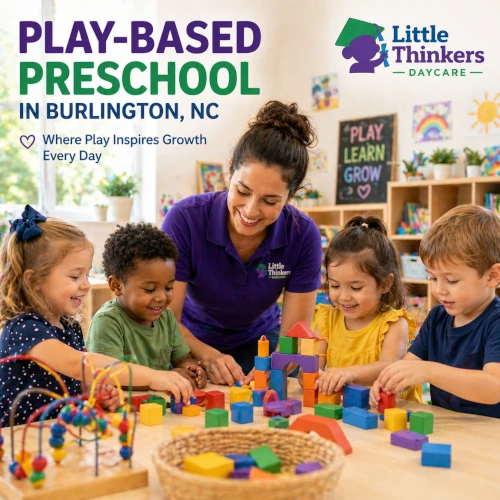
That’s why more families in Burlington, Graham, and Elon are looking for a preschool that offers more than basic childcare. They want a place where their child feels safe, supported, engaged, and excited to learn.
At Little Thinkers Daycare in Burlington, NC, play-based learning is at the heart of what we do. Children learn through hands-on activities, guided exploration, creative play, movement, storytelling, and meaningful interaction with teachers and classmates.
Because play is not a break from learning. For young children, play is one of the most powerful ways learning happens.
What Is Play-Based Learning?
Play-based learning is an early childhood education approach where children build important skills through hands-on experiences, creativity, movement, and guided play. Instead of relying heavily on worksheets or passive instruction, children actively participate in learning.
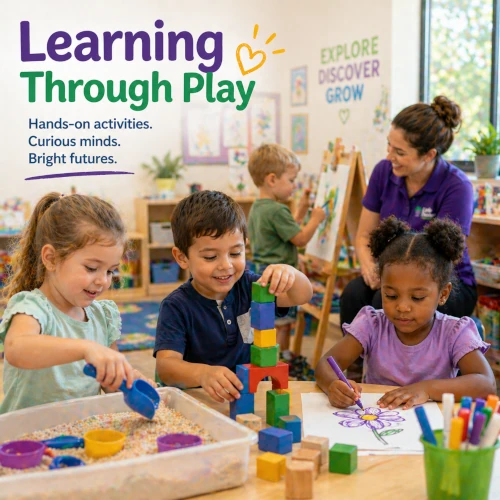
In a play-based preschool classroom, children may learn by building with blocks, painting, singing, sorting objects, exploring sensory bins, acting out stories, solving puzzles, or working with friends on a shared activity.
This type of learning helps children develop skills in a natural, age-appropriate way. It supports communication, problem-solving, creativity, social development, confidence, and independence.
Families interested in how this approach fits into a full early learning environment can also explore our preschool program in Burlington.
Why Play-Based Preschool Works
Young children are naturally curious. They want to touch, move, explore, ask questions, and try new things. Play-based learning works because it matches how children are already wired to learn.
1. It Builds Stronger Thinking Skills
When children build, sort, compare, pretend, and problem-solve, they strengthen early cognitive skills. They learn cause and effect, patterns, planning, memory, and critical thinking.
2. It Supports Language Development
Play gives children opportunities to talk, listen, describe, ask, explain, and tell stories. These interactions support vocabulary growth and communication skills.
3. It Encourages Social Skills
During play, children learn how to share, take turns, cooperate, solve disagreements, and build friendships. These skills matter in preschool, kindergarten, and beyond.
4. It Builds Confidence
Children gain confidence when they are allowed to make choices, try new tasks, explore independently, and experience success through hands-on activities.
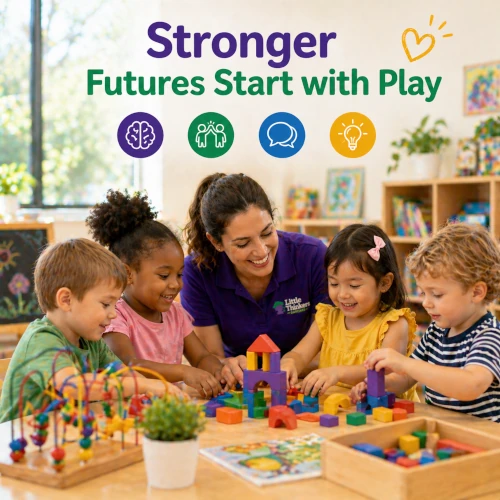
Play-based learning helps children grow academically, socially, emotionally, and physically. It does not force learning before a child is ready. Instead, it creates meaningful experiences that make learning feel natural and exciting.
Play-Based Preschool vs. Traditional Preschool
Many parents wonder how play-based preschool compares to a more traditional classroom setting. The biggest difference is how children experience learning.
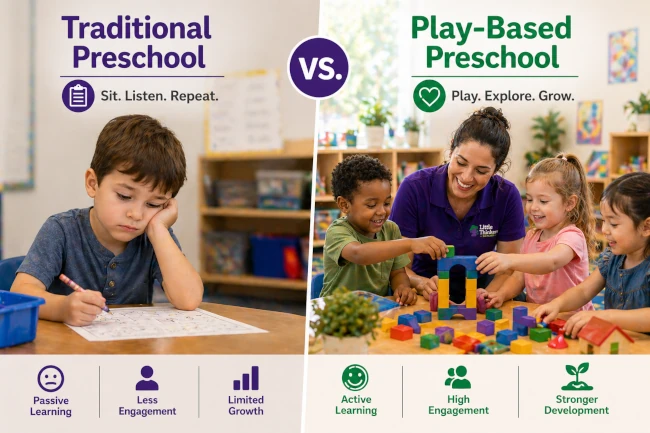
| Traditional Preschool | Play-Based Preschool |
|---|---|
| Often relies more on worksheets and sitting still | Uses hands-on learning and movement |
| Children may be passive listeners | Children actively explore and participate |
| Learning can feel forced or repetitive | Learning feels engaging, natural, and meaningful |
| Focuses mainly on academic tasks | Supports academic, social, emotional, and physical growth |
At Little Thinkers, children are not expected to sit quietly all day. They are encouraged to explore, create, communicate, move, imagine, and build real-world skills through meaningful activities.
What Skills Do Children Build Through Play?
Play-based preschool helps children build a wide range of developmental skills. These skills prepare children not only for kindergarten, but also for life.
Communication
Children learn how to express ideas, ask questions, listen to others, and use language in real situations.
Problem-Solving
Building towers, solving puzzles, and exploring materials help children think critically and test solutions.
Creativity
Art, music, pretend play, and open-ended materials help children use imagination and original thinking.
Social Development
Group play helps children learn friendship, cooperation, patience, kindness, and teamwork.
Independence
Children gain confidence when they make choices, complete activities, and learn to try again.
Kindergarten Readiness
Play-based learning helps children develop early literacy, math, listening, focus, and classroom participation skills.
What to Look for in a Play-Based Preschool in Burlington, NC
Not every preschool that uses the word “play” is truly play-based. A strong play-based program should be structured, intentional, safe, and led by caring teachers who understand child development.
Guided Play and Free Play
Children benefit from both teacher-guided activities and independent exploration. The best classrooms offer a healthy balance of structure and freedom.
Small Class Sizes
Smaller groups allow teachers to provide more individual attention, better support, and stronger connections with each child.
Safe, Clean Classrooms
A preschool environment should feel clean, organized, welcoming, and secure so children can learn comfortably.
Strong Parent Communication
Parents should feel informed and connected. Open communication helps families understand how their child is learning and growing.
Parents can also review a center’s daily daycare schedule to better understand how learning, play, meals, rest, and activities fit together throughout the day.
Why Burlington Families Are Choosing Play-Based Preschool
Families in Burlington, Graham, and Elon are increasingly looking for daycare and preschool programs that provide more than supervision. Parents want a place where children are safe, loved, engaged, and prepared for the next stage of learning.
Play-based preschool gives children the opportunity to build academic readiness while also developing the confidence, communication, and social skills they need to thrive.
Why Little Thinkers Daycare Stands Out
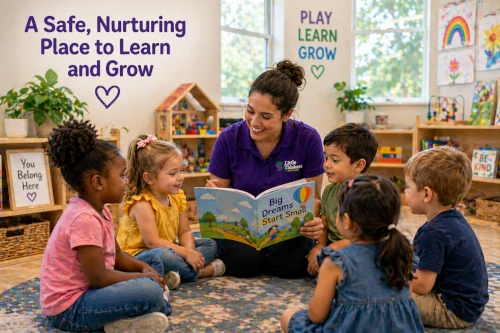
If you are searching for a play-based preschool in Burlington, NC, Little Thinkers Daycare is designed with your child’s growth in mind.
Our approach focuses on helping children grow through play, structure, encouragement, and meaningful interaction. We believe children learn best when they feel safe, supported, and excited to participate.
Play-Based Learning With Purpose
Our activities are designed to support development while still giving children room to explore, create, and discover.
Caring Teachers
Our teachers engage with children, guide learning, encourage confidence, and create a warm classroom experience.
Programs From Infants to Preschool
Families can explore care options for different ages, including our infant daycare in Burlington NC.
A Philosophy Focused on Growth
Learn more about our approach to early learning and how we support each child’s development.
Parents can also meet our teachers to learn more about the caring people who help make Little Thinkers a special place for children.
What Parents Can Expect When They Visit
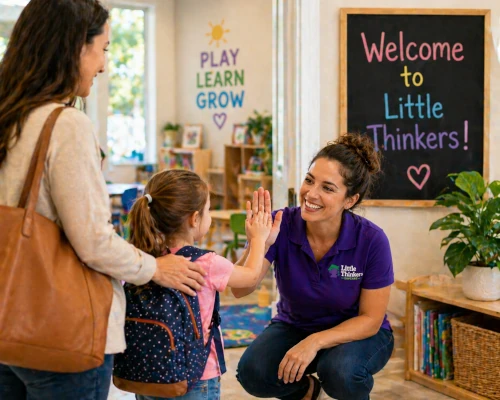
Choosing a preschool is a big decision. The best way to know if a daycare is the right fit is to visit, ask questions, and see the environment for yourself.
When you visit Little Thinkers, you can see how children interact, how teachers engage, and how the classroom supports learning through play.
During a tour, parents can look for:
- Warm teacher-child interactions
- Clean and organized classrooms
- Age-appropriate toys and materials
- Children who look engaged and comfortable
- A daily routine that supports learning, rest, play, and growth
Schedule a Tour at Little Thinkers Daycare
Your child deserves more than basic care. They deserve a safe, nurturing environment where they can learn, grow, play, and thrive.
Frequently Asked Questions About Play-Based Preschool
What is a play-based preschool?
A play-based preschool uses guided play, hands-on activities, social interaction, movement, and creativity to help children build important academic, social, emotional, and physical skills.
Is play-based learning better for preschool children?
Play-based learning is highly effective for young children because it matches how they naturally learn. It supports problem-solving, communication, confidence, social development, and early school readiness.
Does play-based preschool prepare children for kindergarten?
Yes. Play-based preschool helps children build early literacy, math thinking, listening skills, independence, social skills, and confidence—all important for kindergarten readiness.
What should I look for in a play-based preschool in Burlington, NC?
Look for structured play, caring teachers, small class sizes, safe classrooms, parent communication, and a curriculum that supports whole-child development.
How do I schedule a tour at Little Thinkers Daycare?
You can schedule a daycare tour through the Little Thinkers Daycare contact page.
Helpful Little Thinkers Resources
Continue learning more about our programs and approach:
