Why Play-Based Learning Works for Preschoolers in Burlington, NC
More parents in Burlington, NC are searching for preschool learning methods that help children grow socially, emotionally, and academically — not just sit quietly in a classroom.
That’s why many families are choosing preschool programs in Burlington, NC that focus on hands-on learning, confidence-building, and whole-child development.
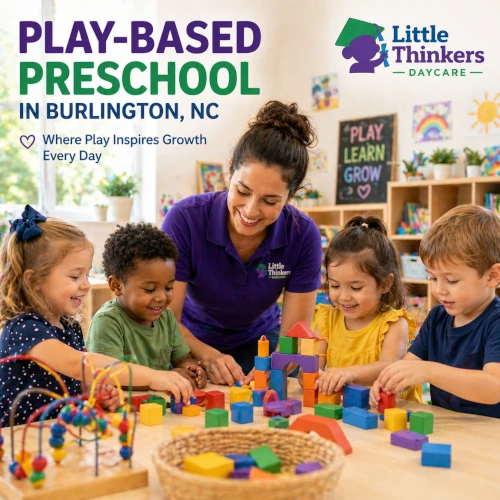
At Little Thinkers Daycare in Burlington, NC, children learn through movement, creativity, exploration, storytelling, social interaction, and hands-on activities designed to support real development.
If you are comparing options for play-based preschool in Burlington, NC, this guide explains why play-based learning works and how it helps children prepare for future success.
What Is Play-Based Learning?
Play-based learning is an early childhood education method where preschool children build important skills through guided play, exploration, creativity, movement, and real-world interaction.
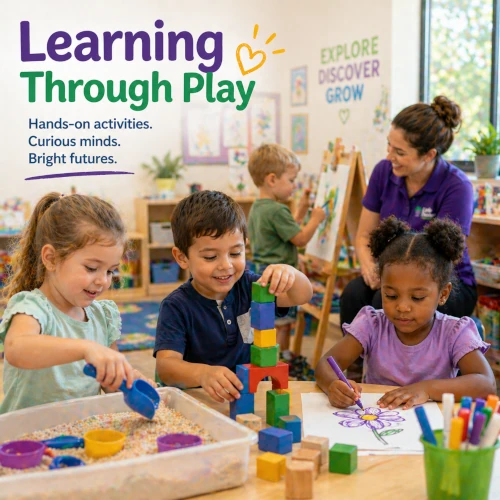
Instead of spending most of the day listening passively or completing repetitive worksheets, children actively participate in activities that encourage:
- Communication
- Problem-solving
- Creativity
- Social development
- Confidence
- Critical thinking
This approach connects closely with our approach to early learning, where children are encouraged to explore, ask questions, create, and build confidence in a supportive classroom environment.
Why Play-Based Learning Works
Preschool-aged children are naturally curious. They learn by touching, exploring, asking questions, building, pretending, moving, and interacting with others.
Unlike more traditional preschool learning methods, play-based learning supports the way children’s brains develop during early childhood.
🧠 Stronger Thinking Skills
Activities like building blocks, solving puzzles, sorting objects, and imaginative play help children develop memory, reasoning, planning, and problem-solving abilities.
🗣 Better Communication
Children naturally build language skills through conversation, storytelling, singing, pretend play, and interaction with teachers and classmates.
💛 Social & Emotional Growth
Preschoolers learn to share, cooperate, express emotions, build friendships, and gain confidence through group play and guided interaction.
🌱 Confidence & Independence
Play-based classrooms encourage children to make choices, explore independently, and feel successful through hands-on learning experiences.
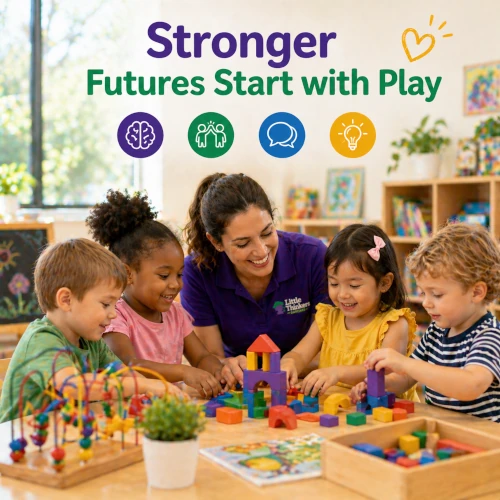
One of the biggest play-based learning benefits is that children enjoy learning. They stay engaged, curious, and excited about discovering new things.
Parents who want to understand how daily learning fits into the classroom can also review our daily preschool schedule.
Play-Based Preschool vs. Traditional Preschool Learning Methods
Many traditional preschool models rely heavily on sitting still, listening, repetition, and worksheets. Play-based learning takes a different approach by making children active participants in the learning process.
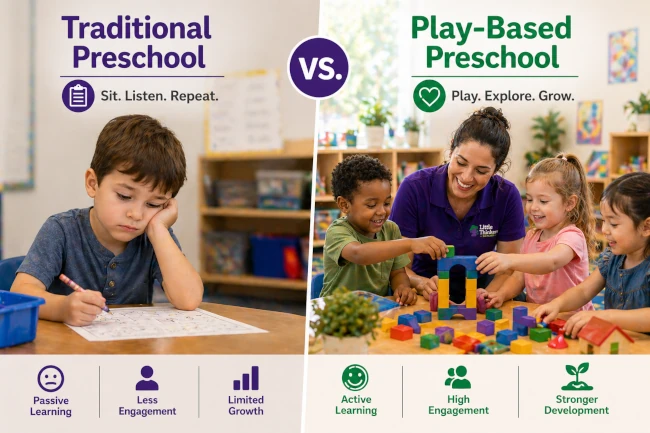
| Traditional Preschool | Play-Based Preschool |
|---|---|
| Passive learning | Hands-on exploration |
| Worksheets & repetition | Creative learning activities |
| Sitting still for long periods | Movement & active participation |
| Teacher-centered instruction | Guided discovery & interaction |
| Less engagement | Higher curiosity & enthusiasm |
At Little Thinkers Daycare, we believe children thrive when they are actively involved in learning — not simply watching or listening.
This is why our preschool program in Burlington focuses on hands-on activities, social interaction, movement, creativity, and teacher-guided exploration.
Play-Based Learning Benefits for Preschoolers
Kindergarten Readiness
Play-based preschool helps children develop listening skills, focus, communication, early literacy, and social skills needed for kindergarten success.
Emotional Security
Children learn best when they feel safe, comfortable, and supported in their classroom environment.
Creativity & Imagination
Open-ended play encourages children to think creatively and use imagination to solve problems and explore ideas.
Healthy Social Development
Group activities help preschoolers build friendships, empathy, cooperation, and communication skills.
These benefits are why many parents searching for play-based preschools in Burlington, NC are moving away from worksheet-heavy classrooms and toward learning environments that support the whole child.
What Parents Should Look for in Preschool Learning Methods
When choosing a preschool, parents should look beyond location alone. The right preschool learning methods should support your child’s growth in a way that feels safe, natural, and developmentally appropriate.
Guided Play
Children should have opportunities for both free exploration and teacher-guided learning activities.
Small Class Sizes
Smaller groups allow teachers to provide more personal attention and stronger support.
Safe Classrooms
A safe, clean, structured classroom helps children feel secure and ready to learn.
Strong Teacher Connection
Caring teachers help children feel comfortable, supported, and confident during the day.
Parents can meet our teachers to learn more about the caring team behind Little Thinkers Daycare.
Why Families in Burlington Choose Little Thinkers Daycare
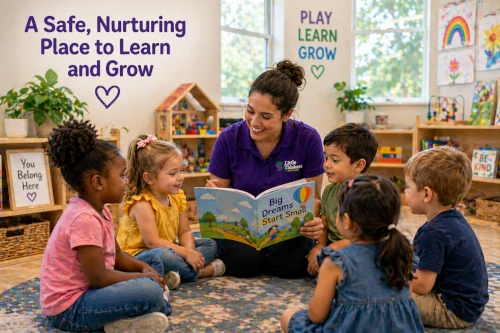
Families in Burlington, Graham, and Elon are increasingly looking for preschool programs that offer more than supervision.
They want:
- Safe, structured classrooms
- Caring teachers
- Small class sizes
- Hands-on learning
- Kindergarten readiness
- Confidence-building experiences
Little Thinkers Daycare is designed for families who want a nurturing early learning environment where children can play, learn, grow, and thrive.
If you are still comparing options, visit our main Little Thinkers Daycare in Burlington, NC page to learn more about our programs and approach.
Families with younger children can also explore our infant daycare in Burlington, NC.
See Why Play-Based Learning Works
The best way to understand the difference is to experience it for yourself.
Come see how Little Thinkers Daycare helps children learn, grow, explore, and build confidence through play-based preschool learning.
Frequently Asked Questions About Play-Based Learning
What are the benefits of play-based learning?
Play-based learning supports communication, creativity, confidence, social development, critical thinking, and kindergarten readiness through hands-on activities and exploration.
Why are play-based preschool learning methods effective?
Preschoolers naturally learn through interaction, movement, curiosity, and experience. Play-based learning aligns with how children’s brains develop during early childhood.
Does play-based preschool prepare children for kindergarten?
Yes. Play-based preschool helps children develop early literacy, social skills, listening skills, independence, and communication abilities needed for kindergarten success.
What makes Little Thinkers Daycare different?
Little Thinkers focuses on play-based learning, small class sizes, caring teachers, safe classrooms, and helping children grow socially, emotionally, and academically.
How can I visit Little Thinkers Daycare?
You can schedule a preschool tour to visit Little Thinkers Daycare and see our classrooms, teachers, and play-based learning environment.